Marketing Trends for 2026: How Brands Are Rewriting the Playbook
.gif)
Marketing in 2026 looks nothing like it did a few years ago. The acceleration of AI marketing trends, immersive creative tools, and shrinking attention spans has redefined the future of marketing. AI search has reshaped how people discover information. Immersive marketing technologies are now accessible. And real-time 3D content creation—once reserved for Hollywood—is available to any brand ready to stand out.
Audiences no longer just watch marketing; they experience it. Paid ads aren’t dead. Billboards aren’t dead. Search isn’t dead. But the mix has evolved.
The brands winning in 2026 marketing trends embrace speed, interactivity, and automation. They rely on AI-driven content creation, interactive content marketing, and faster speed-to-content workflows. Below are the major shifts shaping 2026 — and how marketers can adapt.
1. AI Search Is Reshaping Discovery and Brand Visibility
AI-powered search engines now deliver synthesized answers instead of lists of links. Platforms like Google Gemini, ChatGPT, and Perplexity increasingly surface insights directly—often without sending users to a brand’s website.
As a result, traditional SEO alone is no longer enough. Brands must optimize for AI search visibility, not just rankings.
High-performing AI discovery strategies focus on:
- clear, structured language AI models can parse
- strong topical authority across core subject areas
- expert-driven, long-form content that signals credibility
HubSpot’s 2025 shift toward AI snippet optimization is a clear signal of where discovery is headed, resulting in measurable gains in AI-driven mentions and citations.
In 2026, being referenced inside AI-generated answers often delivers more value than ranking first on a traditional search results page.
2. Location-Based and Experiential Marketing Is Becoming Scalable
As attention spans shrink, brands are investing in location-based marketing that creates high-impact engagement where audiences already are. These experiences don’t replace digital marketing—they extend it by creating moments people want to capture and share.
Location-based experiences work because they deliver:
- guaranteed attention in real-world environments
- emotional and sensory engagement
- built-in earned media through user-generated content
Nike’s Airphoria, Disney’s immersive pop-ups, and Delta’s airport activations show how experiential marketing technology has become repeatable and scalable.
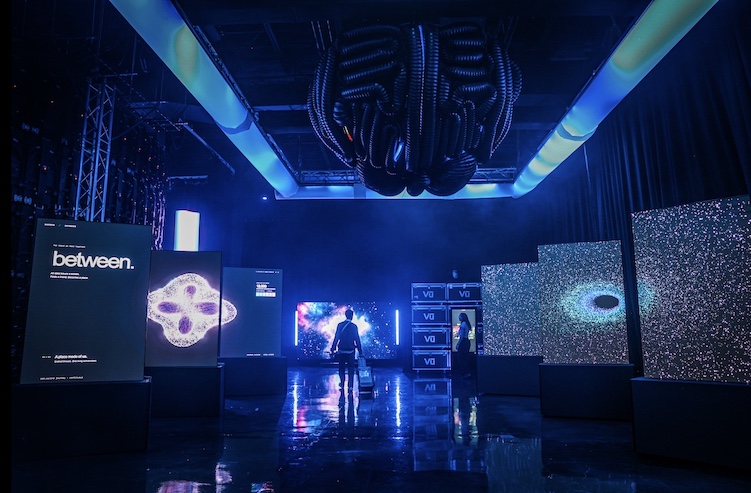
What’s changed is accessibility. Advances in LED display technology, real-time engines, cloud rendering, and AI-powered workflows allow immersive brand experiences to deploy across pop-ups, trade shows, stadiums, and public spaces.
In 2026, immersive experiences are no longer experimental—they’re a core marketing channel.
3. Immersive and Interactive Content Is Outperforming Static Creative
Static 2D creative continues to lose effectiveness as audience expectations rise. Modern consumers expect content that feels dynamic, responsive, and personalized.
This shift is accelerating adoption of interactive content marketing, 3D content marketing, and real-time brand environments.
These experiences adapt based on audience behavior, location, time, or context—driving deeper engagement than traditional formats.
This is now achievable at scale because:
- AI can generate and adapt environments instantly
- real-time rendering tools are widely available
- cloud-based systems allow rapid updates and deployment
A standout example: Coca‑Cola Creations deployed reactive 3D billboards that updated based on weather, time, and local events—one asset generating millions of organic impressions.
This has become the new standard for immersive marketing and dynamic presentation environments.
Vū’s platform enables brands to deploy these experiences without a Hollywood-sized production pipeline.
4. Earned Media Strategy Is Overtaking Paid-First Campaigns
As paid performance becomes more competitive and less predictable, earned media has re-emerged as a primary growth driver. Leading brands now design marketing moments to be shareable by default.
Effective earned media strategies emphasize interactive or personalized experiences, photo- and video-ready environments, and short, high-impact moments built for social distribution.
Earned media compounds over time, extending reach well beyond the original activation. In 2026, the strongest brands treat every touchpoint—physical or digital—as a chance to generate organic visibility.
Platforms like Vū One Mini, Vū Studio, and Vū Experiences support this shift by enabling teams to:
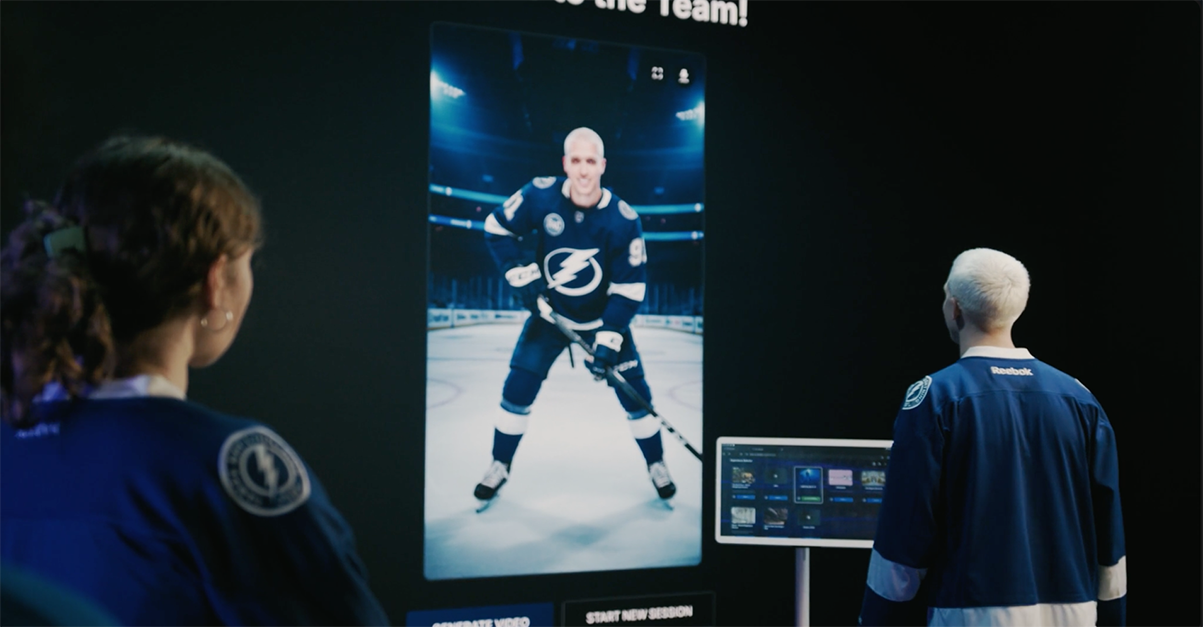
- create AI-personalized photo and video interactions
- build immersive, interactive campaigns
- adapt content by audience or location in real time
- deploy mobile or in-venue immersive environments
Consider a stadium or arena:
- Friday: concert visuals
- Saturday: game-day hype
- Weekdays: corporate meetings and immersive presentations
The same infrastructure supports multiple use cases, maximizing earned reach without rebuilding assets.
5. Presentations and Brand Storytelling Are Becoming Dynamic and Adaptive
Traditional slide decks are giving way to immersive, real-time presentation environments. Shorter attention spans and higher expectations have pushed storytelling toward interactivity.
Modern brand presentations feature real-time scene and content switching, immersive visual environments, and non-linear, choose-your-own-path narratives.
Instead of static decks, brands are using adaptive presentation systems to guide conversations, respond in the moment, and create more memorable experiences.
Companies like Meta, Amazon, and Accenture already use interactive 3D environments to navigate content dynamically.
Vū enables:
- instant scene switching
- immersive backdrops
- real-time 3D presentation environments
- audience-driven content journeys
This is one of the fastest-growing brand storytelling trends of 2026.
Final Takeaway: In 2026, Brands Compete for Presence—Not Just Attention
The future of marketing isn’t about shouting louder. It’s about showing up in the right place, in the right format, at the right moment.
Winning brands in 2026:
- appear where AI delivers answers
- engage audiences through immersive experiences
- use interactive, real-time content to generate earned reach
- move faster with adaptive, scalable marketing systems
This next era of marketing is defined by AI search optimization, immersive experiences, interactive content, and speed.
Vū is built for this future.